Ai integration into web3


You see ai integration in web3 when intelligent systems and blockchain technology work together. This means ai can make decisions, learn from data, and improve the ecosystem. Web3 and ai move from hype to real value, as platforms focus on useful tools that help you every day. For example, onboarding features like in-app wallets and interactive tutorials make decentralized applications easier to use. Many people use ai in daily life, but web3 adoption is still growing as more users join. Ai and web3 create smarter, more user-friendly applications. Generative ai unlocks new ways to interact with data and build trust. Ai could help web3 become more accessible, and web3 could help ai stay transparent and fair. You will see these changes shape the entire ecosystem.
Key Takeaways
AI integration in web3 enhances user experiences by personalizing content and improving security, making applications more engaging.
Decentralized AI networks give users control over their data, ensuring privacy and reducing risks associated with centralized systems.
Businesses benefit from AI in web3 through improved decision-making, operational efficiency, and innovative revenue models.
AI oracles provide reliable, real-time data for smart contracts, enhancing the speed and accuracy of decentralized applications.
Future trends indicate that AI will play a crucial role in the evolution of web3, leading to smarter platforms and better user interactions.
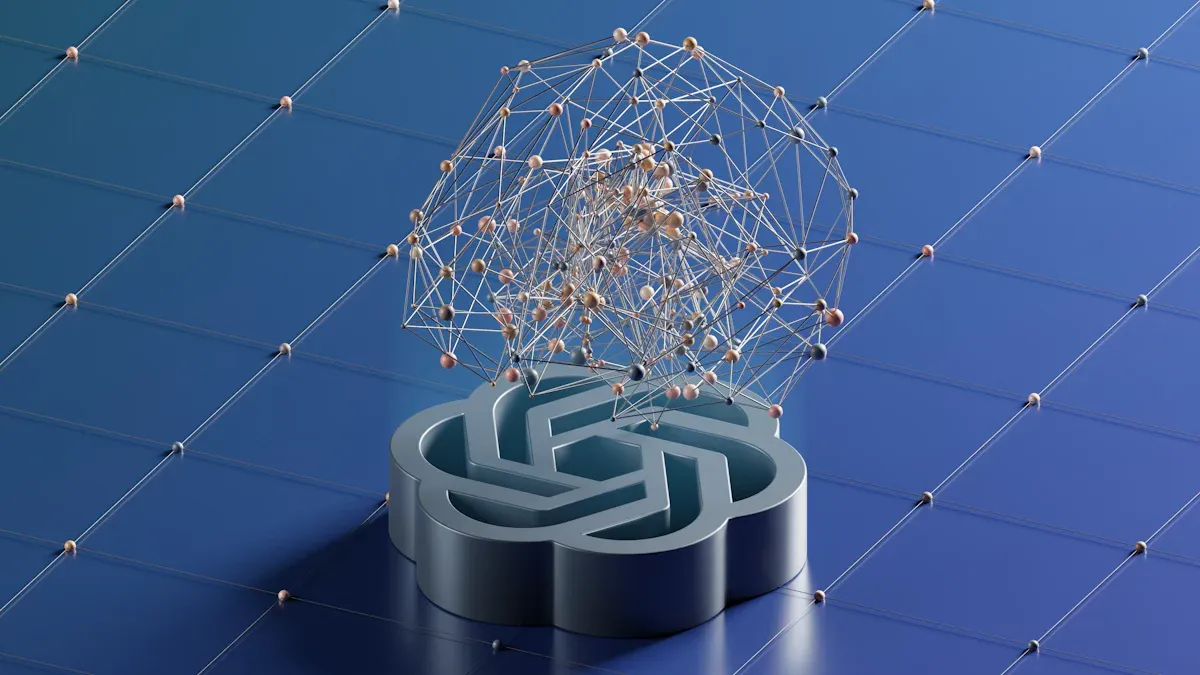
AI and Web3 Convergence
Key Technologies
You see many technologies working together to make ai and web3 possible. These technologies create smarter, more secure, and more user-friendly decentralized ai systems. Here are the main technologies driving this change:
Blockchain technology gives you a secure and transparent way to run decentralized applications. You can trust the data and transactions because blockchain records everything.
Decentralized applications (dApps) use ai to make decisions and give you personalized experiences. You interact with dApps that learn from your actions and improve over time.
Decentralized autonomous organizations (DAOs) use ai to help groups make decisions and manage resources. You join DAOs that use ai to analyze proposals and vote more efficiently.
Intelligent digital identities let you control your own identity. These identities change based on your interactions, making your experience safer and more flexible.
Tip: When you use web3 platforms, you benefit from these technologies working together. They make decentralized ai networks smarter and more reliable.
Integration Methods
You find several methods that connect ai and web3. These methods help you use decentralized ai in your daily life and business. Here is what these integration methods look like:
Data aggregation collects and organizes information from web3 platforms. This step makes sure ai models work with the right data.
Choosing relevant ai models means picking the best model for your needs. You might use ai for analytics, user interaction, or predictions.
Decentralized ai training uses web3 networks to train ai models. You can help train models by sharing data or resources.
Smart contract automation puts ai logic into smart contracts. These contracts make decisions and act on their own, giving you faster and smarter results.
Regular updates keep your ai and web3 systems working well. You see improvements as ai evolves and new features appear.
You also notice that blockchain technology helps ai work better in web3. The table below shows what blockchain protocols do for ai integration:
Evidence Description | Explanation |
|---|---|
Secure architecture of blockchain | You get a trusted foundation for decentralized applications. Blockchain protects transactions and improves ai data insights. |
Machine learning makes transaction processing faster and data verification stronger. You see less fraud and more security. | |
Automation of blockchain functions | AI automates tasks, speeds up transactions, and lowers costs. You experience better performance in web3 platforms. |
You need to think about security when you use ai and web3 together. Decentralized ai agents can act on your behalf, but you want to limit their privileges. External validators check ai actions to make sure they follow the rules. Transparent code and logic help you spot problems early.
Note: Businesses use governance frameworks to define what ai can do in web3. Agreements with ai vendors and privacy-by-design principles protect users and data.
You see that web3 could help ai stay transparent and fair. Decentralized ai networks give you more control over your data and identity. These methods and technologies make ai and web3 a powerful combination for the future.
AI Integration Benefits
Smarter dApps
You see smarter dApps changing how you interact with web3 platforms. These applications use ai to make decisions, analyze data, and adjust to new information. When you use decentralized ai in dApps, you get more reliable and efficient services. Ai-powered smart contracts process data, recognize patterns, and automate decisions in real time. This means dApps can respond to market changes or user actions instantly.
Ai integration in dApps improves throughput and reduces errors. For example:
In the Colosseum testbed, average throughput increased from 71.34 Mbps to 71.53 Mbps with the dApp.
In the Arena testbed, throughput changed from 77.98 Mbps to 76.37 Mbps with the dApp.
Spectrum sharing dApps prevent interference, leading to lower error rates and better user experience.
You benefit from decentralized ai because it handles large volumes of data quickly. Ai resources identify anomalies and reduce bottlenecks in business processes. This makes dApps more scalable and reliable. The table below shows how ai and web3 work together to improve scalability:
Evidence Description | Key Points |
|---|---|
AI-Powered Smart Contracts | Enhance data processing, recognize patterns, and automate decisions in real-time. |
Real-Time Operations | Ai-enhanced applications achieve control latency below 450 microseconds. |
Data Handling | Process large data sets quickly, identify anomalies, and reduce bottlenecks. |
You see that ai development in web3 leads to smarter dApps that adapt to your needs. Decentralized ai networks democratize access to ai, making advanced features available to everyone. This supports the growth of the ai economy and encourages accelerating adoption.
Enhanced User Experience
You notice that ai and web3 platforms offer a better user experience. Ai algorithms personalize your content and recommendations in real time. You get tailored suggestions that match your interests and habits. Ai resources detect unusual patterns, keeping your data private and secure.
The table below highlights improvements in user experience metrics:
Metric | Improvement Description |
|---|---|
Personalization | Ai analyzes your behavior to provide tailored content and recommendations. |
Security | Ai detects unusual patterns for proactive security measures, keeping your data safe. |
Operational Efficiency | Ai optimizes back-end operations, reducing costs and speeding up processes for users and operators. |
Interactivity | Ai enables natural user interfaces, making platforms more accessible for everyone. |
Accessibility | Enhanced interfaces break down barriers for less tech-savvy users, improving engagement. |
You see that ai-driven personalization features impact user retention rates in web3 applications. Ai personalization leads to a 28% reduction in customer churn rates. Companies using ai personalization achieve 1.7× higher conversion rates in marketing campaigns. A McKinsey study found that 78% of consumers are more likely to repurchase if they receive personalized content. These improvements show that ai and web3 together create platforms that keep you engaged and loyal.
Decentralized ai networks democratize access to ai resources, making platforms more inclusive. You experience easier onboarding, intuitive interfaces, and better support. This drives accelerating adoption and helps more users join the web3 ecosystem.
Enterprise Adoption
You see enterprises adopting ai and web3 solutions at a growing rate. The percentage of web3 projects using ai increased from 27% in 2023 to 34% in 2024. Businesses recognize the value of decentralized ai for data management, decision-making, and operational efficiency.
Main drivers for enterprise adoption include:
Enhanced decision-making capabilities
Improved operational efficiency
Innovative revenue models through token offerings and NFTs
Customer engagement through decentralized applications
You notice that enterprises use ai resources to automate tasks, analyze large data sets, and create new business models. Decentralized ai networks support the democratization of ai development, allowing companies to build smarter products and services. The ai economy grows as more businesses join the web3 ecosystem.
You benefit from accelerating adoption because enterprises bring robust solutions and new opportunities. Ai and web3 together create a foundation for innovation, transparency, and efficiency. This supports the expansion of decentralized ai and encourages more organizations to invest in ai development.
Decentralized AI Networks

Data Ownership
You see a big difference between decentralized AI networks and traditional systems when it comes to data. In centralized AI, one company controls all the data in a single place. This setup can lead to security risks and makes it hard to scale. Decentralized AI networks use a different approach. They spread data and computing tasks across many nodes. This design gives you more privacy and makes the system stronger against failures.
With decentralized AI platforms, you control your own data. You decide when and how to share it. Blockchain technology helps keep your information safe and lets you share it only with trusted parties. This setup protects your privacy and reduces the risk of unauthorized access. You avoid problems like biased decisions that can happen when one group owns all the data.
Legal frameworks help protect your rights as a data owner. For example:
Data governance frameworks set rules for privacy and security.
The EU AI Act requires strong data protection in AI systems.
Intellectual property rights matter for AI algorithms and data.
AI Marketplaces
AI marketplaces on web3 let you buy, sell, and share AI models and data in new ways. These platforms use blockchain to make sure every transaction is secure and fair. You can find several popular AI marketplaces today:
SingularityNET lets you create and sell AI services.
Fetch.ai supports agents that automate tasks for users.
Ocean Protocol helps you share data for AI training.
Numeraire uses AI for financial predictions.
DeepBrain Chain offers computing power for AI.
Cortex runs AI models on smart contracts.
Bittensor rewards developers for sharing AI models.
AI marketplaces use tokenization to turn models, data, and computing power into digital assets. This process gives you new ways to earn money and makes resources easier to access. The table below shows how these features work:
Feature | Description |
|---|---|
Tokenization | Turns AI models and data into digital assets for trading and royalties. |
Accessibility | Lowers costs and opens access to quality data and AI tools. |
Monetization | Lets you earn from trading or sharing your AI assets. |
You can upload your AI models, offer data sets, or rent out computing power. Smart contracts make sure everyone gets paid fairly and that transactions stay transparent.
Challenges in Web3
Technical Barriers
You face several technical barriers when you use ai in web3 platforms. Scalability issues often slow down processing speeds. This affects how quickly ai applications can respond in real time. Many blockchain networks struggle to handle large volumes of data and transactions. You may notice delays when ai tries to analyze or act on data during busy periods.
Interoperability concerns also create challenges. Different web3 platforms use unique protocols, making it hard for ai models to connect and share data across systems. The lack of universal standards for data makes communication between ai and web3 networks difficult. You see projects like Chainlink working to bridge these gaps by providing decentralized oracle networks. These networks help integrate real-world data into blockchain systems, which supports better ai adoption.
Regulatory uncertainty adds another layer of complexity. Developers and users often work in a legal grey area because clear frameworks for decentralized ai applications do not exist yet. This slows down adoption and makes it harder for you to trust new solutions.
Note: Scalability and interoperability remain key hurdles for ai deployment in web3. You need reliable infrastructure to support widespread adoption.
Governance and Ethics
You encounter governance and ethical concerns as ai adoption grows in web3. Decentralized ai systems raise questions about accountability and fairness. You want to know who is responsible when ai makes decisions that affect your data or assets.
Several governance models address these concerns. The table below shows what each model focuses on and why it matters for web3 adoption:
Governance Model | Focus Areas | Strengths | Relevance for Web3 |
|---|---|---|---|
NIST AI Risk Framework | Risk identification, assurance | Widely used in U.S. | Needed for U.S. enterprise adoption |
Singapore Model AI Governance | Fairness, explainability | Clear playbooks | Supports SEA adoption and regulator alignment |
China Generative AI Measures | Data legality, content moderation | Enforceable in China | Key for ai-generated content adoption |
Indonesia Personal Data Protection | Consent, minimization, penalties | Strong sanctions | Critical for blockchain game adoption |
You see global standards like the UNESCO AI Ethics Recommendation and the EU AI Act promoting transparency and accountability. These frameworks help ensure that ai systems in web3 treat your data with respect and keep adoption fair.
Tip: Privacy tools such as federated learning, differential privacy, and homomorphic encryption protect your data while allowing ai to learn and improve.
Transparency in ai decision-making builds trust in web3 applications. Automated compliance checks and accurate data validation help you feel confident about adoption. You benefit from governance models that balance decentralization with regulation.
Real-World Impact
AI Oracles
You see AI oracles changing how web3 applications use data. These oracles collect information from many sources and filter out errors. They give you reliable, real-time data for smart contracts. AI oracles use predictive analytics to guess what data you will need next. This reduces waiting time and helps decentralized finance platforms react quickly. You benefit from better security because AI oracles spot sudden price changes and block threats. They also validate data as it arrives, which keeps smart contracts accurate.
AI oracles in web3:
Cross-check data from different places to remove mistakes.
Provide live analytics for fast decisions.
Analyze data off the blockchain for speed and reliability.
Adjust update rates based on demand to save resources.
DAO Governance
You find that DAOs in web3 use AI to improve governance. AI tools help analyze proposals and voter sentiment. This leads to faster and more informed decisions. Autonomous DAOs show higher participation and more frequent proposals. They also make decisions faster and keep members engaged longer.
Metric | SNS DAOs | Other DAOs |
|---|---|---|
Participation Rates | High | Variable |
Proposal Submission Frequency | High | Lower |
Voter Approval Rates | High Alignment | Variable |
Decision Duration | Faster | Slower |
Engagement Over Time | Sustained/Increasing | Declining |
You see that AI-powered DAOs lower the cost and barriers for joining. Liquid democracy models let you delegate votes, which increases engagement. This makes web3 governance more open and efficient.
Future Trends
You will see new trends in the future of decentralized AI and web3. By 2025, most DeFi platforms will use AI for personalization. You will get custom strategies and better user experiences. Decentralized governance and auditing tools will become standard for trust in AI systems. AI-native platforms will set new records for speed and efficiency.
What to expect in web3:
More platforms will use AI agents for better adoption.
Regulation will improve, making AI in web3 safer.
Mainstream users will join as tools become easier to use.
AI agents will connect different blockchain networks.
Fraud detection will get stronger with real-time AI analysis.
You see the future of decentralized AI shaping how you interact with web3. Industry adoption will keep growing, and user experience will keep improving.
You see AI integration making web3 smarter and more autonomous. AI strengthens security, automates compliance, and helps web3 adapt to new challenges.
The combined impact of AI and web3 can reinvent business models, especially in areas like supply chain management.
You notice that decentralized AI networks give you more control and privacy. Experts predict web3 will transform technology and empower users.
Real-world applications show web3 solving business problems and improving efficiency.
Ethical considerations remain important as web3 grows.
You can explore how web3 and AI might change your projects or business.
FAQ
What is AI integration in Web3?
AI integration in Web3 means you use artificial intelligence to make blockchain applications smarter. You see AI helping dApps make decisions, analyze data, and improve user experiences.
What benefits do you get from AI-powered smart contracts?
You get contracts that adjust terms based on real-time data. For example, DeFi loans can change interest rates if market risks shift. This makes your transactions safer and more flexible.
What makes decentralized AI networks different from traditional AI systems?
Decentralized AI networks let you control your own data. You share information only when you want. This setup protects your privacy and gives you more security than centralized systems.
What are AI oracles in Web3?
AI oracles collect and check data from many sources. You use them to get real-time information for smart contracts. They help dApps react quickly and keep your transactions accurate.
What challenges do you face when using AI in Web3?
You face technical barriers like slow processing and data sharing issues. You also need to think about privacy and fairness. Reliable infrastructure and clear rules help you overcome these challenges.
See Also
The Influence of AI Mergers on Web3 and Tech by 2025
Exploring Web3: The Future of Digital Innovation Awaits You
August 2025: A Pivotal Time for Web3's Future and Regulations
Discover the 10 Best-Paying Web3 Careers to Pursue in 2025
The 2025 Shift: NFTs Transforming Ownership and Financial Identity