Why August 2025 marks a make-or-break moment for Web3: regulation, AI integration, and digital sovereignty


August 2025 brings a major shift for crypto. Lawmakers enforce new regulation and legislation. Crypto asset holders see bitcoin and other asset classes face tighter oversight. Bitcoin asset managers must adjust to innovation in compliance. AI integration changes how asset protection works for bitcoin and other crypto asset types. Investors wonder why innovation in asset security for bitcoin and crypto reaches a crossroads. This moment tests if crypto asset innovation and bitcoin asset adoption can survive sweeping regulation. The future of bitcoin, asset management, and crypto asset innovation depends on how August 2025 shapes regulation and integration.
Key Takeaways
August 2025 brings major new regulations like MiCA 2.0 and the EU AI Act that reshape how crypto and digital assets are managed and protected.
AI tools now improve Web3 security by quickly finding smart contract flaws and helping decentralized organizations make smarter decisions.
Users gain more control over their data and identities through digital sovereignty technologies like decentralized identity and privacy-focused solutions.
Strict regulations push some crypto companies to relocate, but those who comply can build trust and access key markets like Europe.
Web3 success depends on balancing innovation with compliance, using AI for security, and empowering users with privacy and ownership.
August 2025: Regulation Shifts

MiCA 2.0 Enforcement
August 2025 marks a turning point for the digital asset ecosystem in Europe. The Markets in Crypto-Assets Regulation (MiCA 2.0) begins full enforcement. This comprehensive regulatory framework sets strict rules for stablecoin regulation, centralized exchanges, and DeFi protocols. Lawmakers designed MiCA 2.0 to bring regulatory clarity and protect users in the crypto ecosystem.
The new legislation requires stablecoins to hold a 1:1 reserve in cash or government bonds. This rule targets stablecoin regulation and aims to prevent risks to the digital asset ecosystem. Centralized exchanges must now perform KYC checks on all wallets with transactions over $1,000. DeFi protocols face new legislation that forces them to appoint legal custodians or risk shutdown in the EU. These changes push many crypto projects to rethink their infrastructure and compliance strategies.
A table shows how MiCA 2.0 impacts the number of licensed Crypto Asset Service Providers (CASPs) in the EU:
Company Name | Country Code |
|---|---|
MoonPay Europe B.V. | NL |
BitStaete B.V. | NL |
Zebedee Europe B.V. | NL |
Hidden Road Partners CIV NL B.V. | NL |
Boerse Stuttgart Digital Custody GmbH | DE |
Bitpanda Asset Management GmbH | DE |
Crypto Finance (Deutschland) GmbH | DE |
OKCoin Europe Limited | MT |
BP23 CA Limited | MT |
Foris DAX MT Limited | MT |
ZillionBits Limited | MT |

The number of licensed CASPs has dropped to only 11. This decline shows why strict regulation can drive talent and capital to other regions. Many companies now consider moving their infrastructure to the U.S., UAE, or El Salvador. These regions offer a more balanced regulatory framework for the digital asset ecosystem. Companies that stay in the EU focus on proactive compliance and work closely with policymakers. They want to align their solutions with the evolving regulatory framework and maintain access to the European market.
EU AI Act Compliance
The EU AI Act also takes effect in August 2025. This legislation introduces a new regulatory framework for AI in the digital asset ecosystem. The Act bans AI systems that manipulate behavior, exploit vulnerabilities, or support social scoring. It also prohibits biometric categorization and emotion recognition in sensitive settings.
The Act divides AI systems into three risk tiers: prohibited, high risk, and minimal risk. High-risk AI systems must meet strict compliance rules. These include transparency, data quality, documentation, human oversight, and conformity assessments. Providers of general-purpose AI models must keep detailed records, register their models, and ensure strong data governance. Generative AI faces extra rules to prevent unlawful content and protect copyrights.
Organizations adapt to this comprehensive regulatory framework by building compliance programs and using automated tools. They monitor their AI models and update their infrastructure to meet the new standards. Supervisory bodies like the European Artificial Intelligence Board oversee enforcement. The Act gives companies time to adjust, but the pressure to comply remains high.
Note: The EU AI Act pushes Web3 and AI companies to rethink their compliance strategies. They must balance innovation with the need for regulatory clarity and user protection.
Global Regulatory Frameworks
August 2025 brings global changes in regulation for the digital asset ecosystem. The U.S. shifts from strict enforcement to supporting innovation in digital assets. Executive orders like EO 14178 and EO 14233 aim to strengthen U.S. leadership in digital financial technology and create a strategic bitcoin reserve. The SEC Crypto Task Force oversees digital asset regulation, while Congress debates new legislation such as the GENIUS Act and the STABLE Act. These bills focus on stablecoin regulation, transparency, and accountability.
Other regions also update their regulatory framework. Legal structures for DAOs and DeFi now require AML and KYC compliance. NFT and crypto taxation laws become formalized. Stablecoin regulation tightens, and central bank digital currencies (CBDCs) gain support as regulated alternatives. Companies see more regulatory clarity and adapt their infrastructure to meet new compliance demands.
A table compares regulatory clarity in the U.S., EU, and BRICS+ regions:
Region | Regulatory Clarity in 2025 | Key Features and Outlook |
|---|---|---|
United States (US) | Evolving with increasing clarity expected from Congress rather than SEC | - Pro-crypto stance under Trump administration |
European Union (EU) | Advancing comprehensive regulatory clarity through MiCA framework | - MiCA finalization provides consistent rules across exchanges and stablecoins |
BRICS+ Regions | Regulatory clarity remains undefined and indirect | - No detailed regulatory framework for Web3 projects in 2025 |
The BRICS+ region launches a gold-backed digital currency in August 2025. This move challenges the dominance of the dollar and may force networks like Ethereum and Polygon to consider commodity-backed stablecoins. However, the BRICS+ region still lacks a comprehensive regulatory framework for Web3 projects. The focus remains on economic competition rather than direct regulation of the digital asset ecosystem.
Why does August 2025 matter for Web3? This month brings new legislation, regulatory clarity, and compliance demands that reshape the digital asset ecosystem. Companies must adapt their infrastructure, embrace stablecoin regulation, and meet the requirements of each regulatory framework. The future of bitcoin, crypto, and the broader ecosystem depends on how well organizations respond to these shifts.
AI Integration in Web3
Smart Contract Auditing
AI has changed how developers secure assets in the Web3 ecosystem. In August 2025, smart contract auditing relies on advanced AI models like ChatGPT-6 and frameworks such as LLM-SmartAudit. These tools use multiple specialized AI agents that work together to analyze Solidity code. This collaboration improves the accuracy and depth of vulnerability detection.
LLM-SmartAudit uses two main modes: Broad Analysis, which scans for a wide range of vulnerabilities, and Targeted Analysis, which focuses on known issues.
The multi-agent approach allows AI agents to challenge each other's findings, leading to more reliable results.
Deep learning models, such as Optimized-CodeBERT, have reached high detection rates, with f1-scores above 93%. These models combine static and dynamic analysis, examining both the code and its behavior during execution.
AI-driven natural language processing helps the system understand the intent and logic of contracts, catching complex security flaws that traditional methods often miss.
Continuous learning lets these tools adapt to new threats, keeping asset protection up to date.
AI-driven auditing tools now outperform traditional methods in both speed and accuracy. They scan and analyze smart contract code in seconds or minutes, compared to days or weeks for manual audits. This rapid process allows developers to deploy asset infrastructure faster and with greater confidence.
Why does this matter for Web3? The rise of AI-powered auditing means asset managers and developers can detect vulnerabilities before hackers exploit them. This shift reduces the risk of asset loss and builds trust in the technology. As a result, more organizations feel confident in adopting Web3 infrastructure for bitcoin and other digital assets.
Autonomous DAOs
AI integration has transformed the way DAOs (Decentralized Autonomous Organizations) manage assets and make decisions. In 2025, many DAOs use AI-powered governance models that analyze proposals using on-chain analytics, technical risk assessments, community sentiment, and economic forecasting. These AI agents review the potential impact on token value, asset security, and treasury health.
AI automates routine tasks like proposal submission, voting, and record-keeping. This automation reduces administrative work and increases efficiency.
In direct democracy DAOs, AI analyzes on-chain data and voter sentiment to provide insights for informed voting.
In delegative and liquid democracy models, AI helps select delegates and optimize representation based on expertise and community values.
AI-powered natural language processing and chatbots lower barriers for members to draft proposals, encouraging broader participation.
Automated resource allocation and dynamic investment strategies allow DAOs to respond quickly to market changes, protecting assets and improving operational efficiency.
A real-world example is the QOC governance model, where AI agents evaluate proposals and human members review the results. This human-in-the-loop approach increases transparency, fairness, and risk detection. Over time, some DAOs may allow AI to make binding decisions, with humans stepping in only for exceptional cases.
Why is this important for Web3? AI-driven governance makes DAOs more efficient and representative. Asset management becomes more secure, and decision-making improves. This innovation encourages wider adoption of DAO infrastructure, supporting the growth of bitcoin and other digital assets.
Dynamic NFTs
Generative AI has sparked a new wave of innovation in the NFT space. Platforms like Art Blocks use algorithms to create unique, on-demand generative art pieces. These NFTs change and evolve based on user interactions or external data, making them dynamic assets.
Art Blocks, for example, has gained attention from major auction houses and collectors. Sotheby's sold 19 Art Blocks pieces for $81,000, showing strong demand for generative art NFTs. AI-powered NFT valuation tools now analyze market trends, rarity, and demand to assess prices more accurately. This technology helps buyers and sellers make informed decisions about their assets.
Metric | Data (2025) | Notes |
|---|---|---|
NFT Users Worldwide | Slight growth from 2024 | |
Daily Active Wallets | Over 10,000 | Engaging with NFTs daily |
NFT Buyers | 794,763 | Number of unique buyers |
NFT Sellers | 377,711 | Number of unique sellers |
NFT Market Valuation | $608.6 million | Projected 11.01% decline from 2024 |
OpenSea Trading Volume | $14.68 billion | Represents 90% of all NFT trading volume |
Average Revenue/User | $59 | Estimated NFT market revenue per user |
AI-generated NFTs represent a growing segment of the market. While specific adoption numbers for AI-generated NFTs are not reported, the overall NFT market remains active, with millions of users and billions in trading volume. The integration of AI into NFT infrastructure supports new forms of asset creation and ownership.
Why does this matter for Web3? Dynamic NFTs powered by AI offer real-world applications for artists, collectors, and brands. This innovation drives adoption of NFT infrastructure and expands the use of bitcoin and other digital assets in creative industries. As AI continues to evolve, the NFT space will see even more asset innovation and new business models.
AI integration in Web3 is not just a trend—it is a necessity for asset security, governance, and creative innovation. The technology enables faster, more accurate audits, smarter decision-making, and new forms of digital ownership. As organizations build their infrastructure for bitcoin and other assets, AI will remain at the core of Web3 innovation and adoption.
Digital Sovereignty Trends
Data Control
Users in the digital asset ecosystem now demand more control over their data and identities. Decentralized identity systems let people own and manage their digital identities across platforms. They can share information only when needed, keeping personal details private. Account abstraction makes wallets easier to use, allowing social logins and automatic fee payments. This lowers barriers for new users and increases asset protection. Privacy-first approaches use zero-knowledge proofs to verify actions without exposing personal data. These methods support consent-based marketing and privacy-preserving analytics. The ecosystem shifts from speculation to sovereignty, with users seeking ownership, intelligence, and access. Self-sovereign identity systems allow encrypted, verifiable credentials, moving control from platforms to users. Consent-based marketing models, like those used by Brave Browser, reward users while keeping their identities safe. Luxury brands such as LVMH test blockchain campaigns using zero-knowledge verification, targeting audiences without collecting personal information. The future of advertising in the digital asset ecosystem focuses on transparency and mutual value, not surveillance.
Privacy and ZK-Rollups
Privacy remains a key concern in the digital asset ecosystem. ZK-rollups use zero-knowledge proofs to validate transactions without revealing sensitive data. This technology helps users keep their asset details confidential while meeting regulatory requirements. The EU mandates reversible privacy for transactions over €1,000, creating tension between privacy and compliance. ZK-rollups bundle many transactions off-chain and submit a single proof on-chain, reducing costs and increasing scalability. Hybrid blockchain solutions use zero-knowledge proofs for KYC and AML compliance, letting users prove eligibility without exposing personal information. Enterprises like JPMorgan and EY use ZKPs for confidential asset settlements and private auditing. The table below shows how ZK-rollups balance privacy and regulatory compliance:
Aspect | Description |
|---|---|
Privacy Enhancement | |
Regulatory Compliance | ZKPs verify user identity without exposing data. |
Confidential Smart Contracts | Smart contracts execute privately. |
Real-World Implementations | zkSync, StarkWare, Tornado Cash, Aztec Protocol. |
Scalability and Cost | ZK-rollups reduce on-chain data and fees. |
Security and Trust | Cryptographic proofs provide strong protection. |
Compliance Efficiency | ZKPs streamline KYC without storing sensitive data. |
ZK-rollups help the digital asset ecosystem balance privacy and regulatory demands, making them vital for asset protection and sovereignty.
Decentralized Social Media
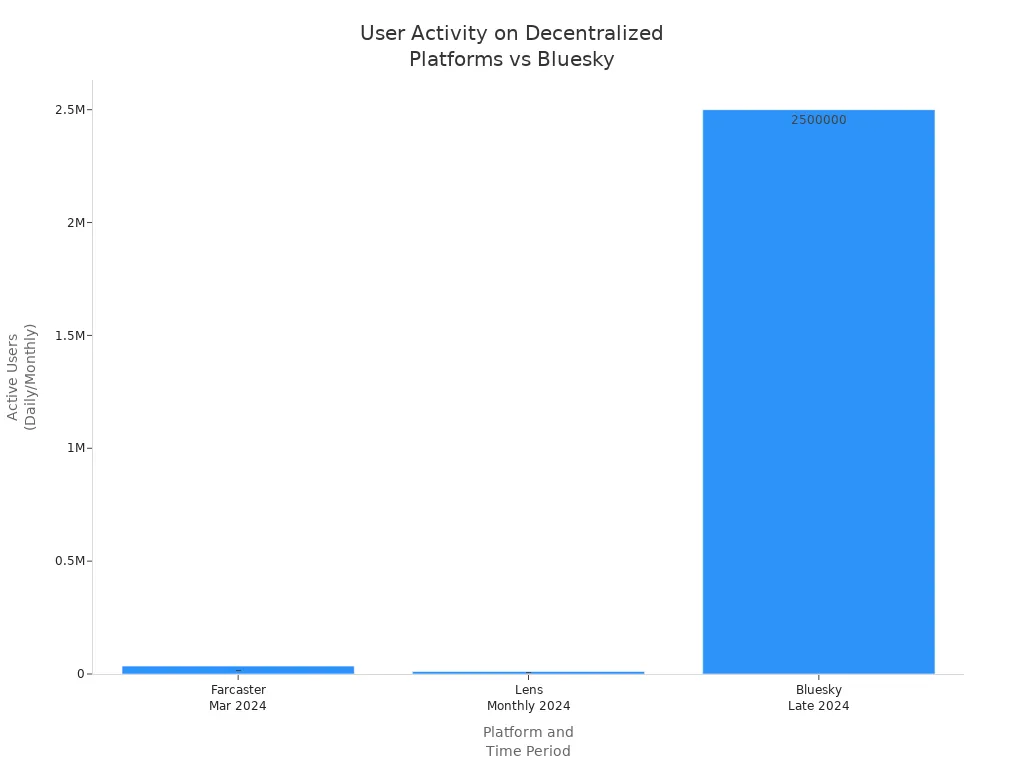
Decentralized social media platforms are changing how users interact and control their data. Many people migrate from X (Twitter) to platforms like Farcaster and Lens. Farcaster has 35,000 daily active addresses and strong developer momentum. Lens Protocol has over 235,000 minted profiles and focuses on NFT-based social graphs. Bluesky, a federated platform, reached 33 million users by early 2025, driven by migration from X. The chart below compares user activity on these platforms:
Decentralized platforms give users ownership of their data and assets. Community-driven governance lets users decide moderation policies and platform rules. Federated moderation allows users to choose communities that match their values. Technical censorship resistance means data is distributed across networks, making it hard for governments or corporations to censor content. Users become active participants, shaping the platform and monetizing their contributions. These features support financial sovereignty and asset protection, making decentralization a core value in the digital asset ecosystem.
The launch of the BRICS+ gold-backed stablecoin also impacts sovereignty. Commodity-backed stablecoins challenge the dominance of the dollar and give nations more control over their financial systems. This shift supports financial sovereignty and decentralization, allowing users and countries to manage their assets and bitcoin holdings with greater independence.
Interplay and Outcomes
Success Scenarios
When regulation, AI integration, and digital sovereignty align in August 2025, the digital asset ecosystem can reach new heights. The convergence of these forces creates a strong foundation for crypto, bitcoin, and stablecoin innovation. Users gain true ownership of their digital asset holdings, and AI personalizes experiences without risking privacy. The regulatory framework encourages responsible innovation, while stablecoin legislation supports secure transactions. The table below shows what success can look like for Web3 adoption:
Description | |
|---|---|
Enhanced User Ownership | Users control digital asset holdings, including NFTs and bitcoin, without platform restrictions. |
Privacy-Focused Personalization | AI tailors services while protecting user data, supporting compliance and privacy. |
Decentralized Collaboration | Teams use shared data and compute resources for innovation in healthcare, climate, and more. |
Monetization and Token Economies | New business models use stablecoin and token payments, optimized by AI for supply and demand. |
Specialized DAOs | DAOs govern AI models, reducing monopolies and supporting innovation. |
AI-Driven On-Chain Governance | Smart contracts with AI enable real-time, adaptive decisions for asset management. |
Regulation Shaping Innovation | Clear regulatory clarity attracts investment and talent, fueling crypto and bitcoin adoption. |
Societal and Work Shifts | New jobs in data curation, AI ethics, and global collaboration emerge. |
Failure Risks
If compliance, AI integration, or digital sovereignty efforts fall short, the digital asset ecosystem faces serious risks. Crypto projects may lose regulatory clarity, leading to delays or shutdowns. Without decentralized storage, asset data remains vulnerable to breaches. Security flaws in bitcoin and stablecoin infrastructure can result in major losses. High-profile hacks, like the Ronin Network breach, show why asset protection is critical. Projects that ignore compliance or fail to adapt to new legislation risk fines and reputational damage. Overhyped promises and lack of clear business value can erode trust in crypto and bitcoin innovation. Vendor lock-in and loss of data control threaten sovereignty and limit adoption. Integration complexity and interoperability issues can stall innovation and reduce the impact of new technology.
Preparing for Change
Web3 organizations must act now to prepare for the new regulatory framework and technology landscape. They should:
Identify their license category under MiCA 2.0 and gather all required documentation for compliance.
Align business processes with AML and KYC rules, especially for stablecoin and bitcoin transactions.
Upgrade infrastructure to meet Transfer of Funds Regulation requirements and ensure asset security.
Submit MiCA license applications and establish compliance teams before deadlines.
Classify AI systems by risk and audit training data for fairness and legality.
Use privacy-enhancing technologies like zero-knowledge proofs and federated learning to protect asset data.
Maintain strong access controls and conduct regular privacy impact assessments.
Monitor AI and asset systems continuously for compliance and security.
Engage with regulators and update policies as legislation evolves.
Tip: Organizations that embed privacy by design, adopt robust compliance measures, and leverage AI for asset protection will lead the next wave of crypto and bitcoin innovation.
August 2025 stands as a turning point for Web3 because experts see strong momentum in bitcoin and asset markets. Ethereum and XRP both show bullish trends, with asset inflows and new upgrades. Regulation, AI, and digital sovereignty now shape how users protect asset data and bitcoin holdings. To prepare, organizations should:
Audit asset and bitcoin systems for compliance.
Integrate AI tools for asset security and bitcoin management.
Adopt privacy solutions for asset and bitcoin transactions.
Simplify asset interfaces and educate users about bitcoin and asset safety.
Build trust in asset and bitcoin platforms.
The future of asset and bitcoin innovation depends on how well everyone adapts to these changes.
FAQ
Why does August 2025 matter for Web3 projects?
August 2025 brings new rules and technology changes. These changes force Web3 projects to follow strict laws and use advanced tools. Projects that adapt can grow. Projects that do not may lose users or face shutdown.
Why do regulations like MiCA 2.0 impact stablecoins and DeFi?
Regulations like MiCA 2.0 set clear rules for stablecoins and DeFi. These rules protect users and stop risky actions. Projects must follow these laws to stay open in Europe. This helps build trust and attract more people.
Why is AI integration important for Web3 security?
AI tools find problems in smart contracts faster than people. They help stop hacks and keep assets safe. AI also helps groups make better choices. This makes Web3 safer and more useful for everyone.
Why do users care about digital sovereignty in 2025?
Users want control over their data and online identity. Digital sovereignty lets them decide who sees their information. This protects privacy and gives users more power in the digital world.
Why are decentralized social media platforms growing?
Decentralized social media gives users control over their posts and data. People move to these platforms for more freedom and better rewards. These platforms also protect against censorship and data misuse.
See Also
July 2025 Marks Shift In AI, Quantum, And Global Power
Tech Reckoning 2025: AI Rules, Quantum Rise, And Trust Breakdown
How AI Mergers Shape Web3 And Tech Industry In 2025
FinTech Crisis 2025: AI Law, Quantum Threats, And CBDC Risks